Self-Healing Integrations
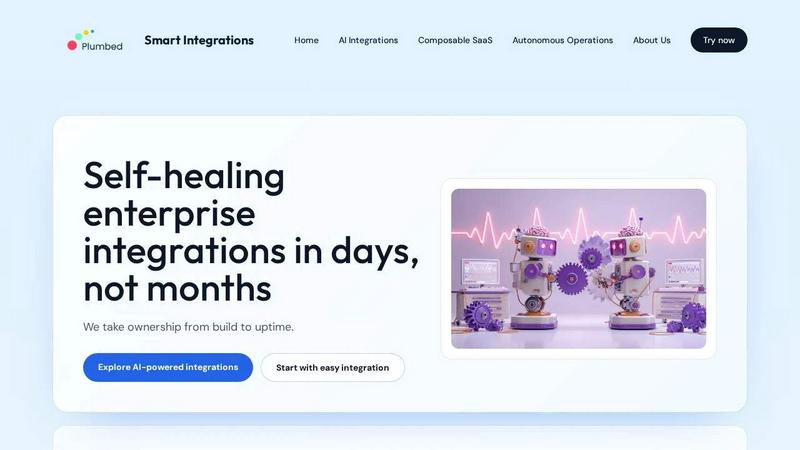
Plumbed.io unlocks autonomous operations with self-healing AI integrations that eliminate downtime and slash months of custom development.
AI tool Details
Explore More
Alternatives
About Self-Healing Integrations
Self-Healing Integrations from Plumbed.io represent a paradigm shift in how enterprises approach the complex, often painful world of system connectivity. This is not merely another integration tool; it is an AI-managed lifecycle for your most critical data flows. The product fundamentally redefines the integration journey by taking complete ownership from the initial build phase through to ongoing operational uptime. For companies that have grown accustomed to the "integration tax" a hidden cost of slow launches, expensive custom development, and constant maintenance that plagues every new channel, system, or partner connection Plumbed.io offers a transformative escape. The core value proposition is simple yet revolutionary: most tools build integrations, but Plumbed builds and keeps them running. This product is specifically designed for custom enterprise integrations that require continuous adaptation, vigilant monitoring, and proactive maintenance long after the go-live date. By replacing fragile, static integration projects with a dynamic, AI-driven lifecycle, Self-Healing Integrations unlock the potential for businesses to scale rapidly without the ballooning operational overhead that typically stifles growth. It is a platform that is prompt-driven, production-ready, and inherently self-healing, ensuring your data flows are not just established, but are perpetually reliable, up-to-date, and resilient against failure. This is the end of integration projects and the beginning of autonomous integration operations.
Features
AI-Powered Self-Healing Engine
The cornerstone of this transformative platform is its intelligent self-healing engine. This feature goes far beyond simple error alerts; it actively monitors every integration in real-time, detects anomalies and potential failures before they impact your business, and autonomously executes corrective actions. When a system update breaks a connection or a data format changes unexpectedly, the AI does not just notify your engineering team it identifies the root cause, applies a fix, and restores normal operations without human intervention. This proactive error handling ensures continuous data flow, dramatically reducing downtime and freeing your team from the burden of constant firefighting.
Autonomous Integration Lifecycle Management
Plumbed.io automates the entire integration lifecycle, a capability that transforms a high-maintenance project into a set-and-forget operational asset. From the initial prompt-driven build to ongoing monitoring, proactive maintenance, and seamless adaptation to system updates, the AI manages every phase. This means that as your connected SaaS applications evolve and release new API versions, Plumbed.io automatically adjusts to maintain compatibility. This feature eliminates the need for expensive, recurring custom development cycles and ensures that your integrations are always current, secure, and performing at their peak, allowing your business to scale without the associated engineering drag.
Prompt-Driven Integration Builder
Forget complex coding and lengthy development sprints. The Self-Healing Integrations platform introduces a revolutionary prompt-driven interface that allows you to build robust, production-ready connections in days, not months. By simply describing the desired integration in natural language, the AI interprets your requirements and generates the underlying logic and data mappings. This feature dramatically lowers the barrier to entry, empowering both technical and non-technical team members to create sophisticated integrations. It accelerates time-to-value for new channels and partners, turning what was once a bottleneck into a rapid, iterative process that keeps pace with business demands.
Composable SaaS Architecture
The platform is built on a composable SaaS architecture, offering unparalleled flexibility and resilience. Instead of monolithic, brittle connections, Plumbed.io enables you to construct integrations from modular, reusable components. This approach means that when a single system or API changes, the impact is isolated and easily managed without breaking the entire integration ecosystem. This composability allows for rapid experimentation and adaptation, enabling your business to plug in new services, swap out legacy systems, or reconfigure workflows with minimal friction. It is the architectural foundation that makes true autonomous operations possible, ensuring your integration landscape is as agile and dynamic as the business it supports.
Use Cases
Automating E-Commerce Channel Expansion
For a rapidly growing retailer, launching a new sales channel like Amazon, Shopify, or a B2B portal previously required months of custom development and testing. With Self-Healing Integrations, the process is transformed into a rapid, managed lifecycle. The AI builds the connection between the retailer's ERP and the new channel, then continuously monitors for price changes, inventory updates, and order synchronization. When a channel's API changes, the system self-heals, preventing order failures or stockouts. This allows the retailer to expand into multiple new markets simultaneously without overloading their engineering team, slashing time-to-revenue and eliminating the integration tax.
Streamlining Financial Data Consolidation
A financial services firm needs to aggregate real-time data from dozens of disparate sources, including banking APIs, market data feeds, and internal accounting systems. Traditional approaches result in fragile, high-maintenance scripts that break constantly. Using Plumbed.io, the firm establishes a self-healing data pipeline that autonomously manages these connections. The AI proactively handles data format inconsistencies, API rate limits, and authentication changes. If a feed goes down, the system reroutes data or queues transactions until a fix is applied automatically. This ensures that critical financial reporting, risk analysis, and compliance dashboards are always accurate and available, with zero manual oversight.
Connecting CRM and Marketing Automation
A B2B company relies on a seamless flow of lead and customer data between its Salesforce CRM and Marketo marketing platform. Any break in this integration leads to lost leads, poor targeting, and wasted marketing spend. Self-Healing Integrations takes ownership of this critical link. The platform continuously syncs contact records, campaign memberships, and activity data. When Salesforce updates its API or Marketo changes a data field, the AI automatically adjusts the mapping and logic to maintain synchronization. This autonomous maintenance ensures that sales and marketing teams always have a single, accurate view of the customer, driving higher conversion rates and operational efficiency.
Managing Multi-System Supply Chain Logistics
A logistics provider manages a complex network connecting its Warehouse Management System (WMS), Transportation Management System (TMS), and multiple carrier APIs. The failure of any single integration can halt shipping operations. Plumbed.io creates a resilient, self-healing mesh between these systems. The AI monitors for latency, error codes, and data corruption across all connections. If a carrier's tracking API is temporarily unavailable, the system queues the data and retries with intelligent backoff, preventing order processing failures. This autonomous operation ensures that inventory levels are accurate, shipments are tracked in real-time, and customer delivery promises are consistently kept, all without constant human intervention.
Frequently Asked Questions
What exactly does "self-healing" mean in the context of integrations?
Self-healing refers to the platform's AI-driven ability to automatically detect, diagnose, and resolve integration failures without human intervention. This goes beyond simple error alerts. The system continuously monitors data flows, API responses, and system health. When it identifies an anomaly, such as a changed data field, a broken API endpoint, or an authentication token expiration, it autonomously applies a corrective action. This could involve remapping data, updating connection parameters, or re-routing traffic. The goal is to maintain continuous, reliable operations and drastically reduce downtime, freeing your team from reactive maintenance tasks.
How is Plumbed.io different from traditional iPaaS solutions?
Traditional Integration Platform as a Service (iPaaS) solutions primarily focus on the initial build phase, providing tools to connect systems but leaving the ongoing maintenance burden on your team. Plumbed.io fundamentally changes this by managing the entire lifecycle. While iPaaS tools require you to monitor, update, and fix integrations as systems change, Plumbed.io's AI takes ownership of these tasks. It is a shift from a project-based model to a managed service model. This means lower total cost of ownership, faster adaptation to change, and a significant reduction in the engineering resources needed to keep integrations running smoothly.
Is this product suitable for non-technical team members?
Yes, one of the key transformative features of Plumbed.io is its prompt-driven interface. This allows users to describe the integration they need in natural language, and the AI generates the underlying logic. This dramatically lowers the technical barrier to creating and managing integrations. While deep technical oversight may be beneficial for complex, enterprise-wide architecture, day-to-day tasks like connecting a new marketing tool or syncing a specific data set can be performed by operations, sales, or marketing team members. This democratization of integration empowers business units to move faster without being a bottleneck for engineering.
What happens when a connected SaaS application updates its API?
This is a primary source of integration failure, and it is exactly the problem Plumbed.io was designed to solve. When a connected application like Salesforce, Shopify, or NetSuite releases an API update, the self-healing engine immediately detects the change. The AI analyzes the new API structure, identifies the impact on your existing integration logic, and autonomously updates the data mappings and connection parameters to restore compatibility. This process happens in the background, often without any interruption to your data flow. It eliminates the manual work of tracking API changelogs and rewriting integration code, ensuring your systems remain seamlessly connected.
Similar to Self-Healing Integrations

Verla AI
Verla is an AI academic assistant for university and college students, combining AI essay writing, academic research, AI detection, AI humanization
Riff
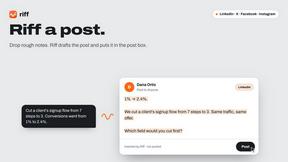
Free Chrome extension. Paste your rough point and Chrome's built-in AI writes a fresh reply for that post on X, LinkedIn, Facebook or Instagram.
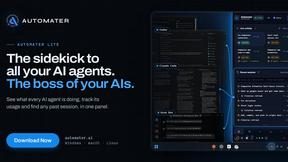
AUTOMATER.ai
A tray helper for every AI coding tool: one searchable library of past sessions, waiting alerts and usage across 9 providers.
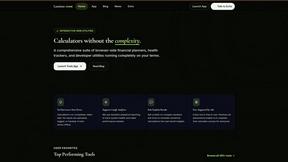
Luminus Tools
A fast, privacy-first suite of online calculators, financial desks, health trackers, and developer uutilities running completely in your browser witho
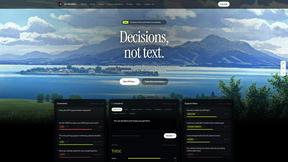
JevModel
Run Choice, Score and Noul decisions on text or JSON. Build visual flows, process batches and integrate results through an API.

GetYouTubeTranscript
Free YouTube transcripts on the web, a Chrome extension, and an API + MCP server so AI assistants can read YouTube.