
Recall.ai
Recall.ai provides the essential API to seamlessly capture recordings and transcripts from any meeting.
AI tool Details
About Recall.ai
Recall.ai is the game-changing infrastructure API that is revolutionizing how software products capture and utilize conversation intelligence. It serves as the powerful engine behind thousands of applications, providing seamless, programmatic access to rich meeting data from platforms like Zoom, Microsoft Teams, and Google Meet. By offering a unified API for transcripts, recordings, and comprehensive metadata, Recall.ai empowers developers and product teams to build advanced features—such as AI notetakers, sales coaching tools, and meeting analytics—in days, not months. This transformative tool is designed for startups and large enterprises across sales, productivity, hiring, and engineering sectors, unlocking the latent potential within every conversation. Its core value proposition lies in eliminating the immense complexity and cost of building in-house meeting infrastructure, allowing companies to focus on their core product and accelerate innovation. With a recent $38M Series B funding round, Recall.ai is solidifying its position as the essential, reliable backbone for the next generation of conversation intelligence.
Features
Meeting Bot API
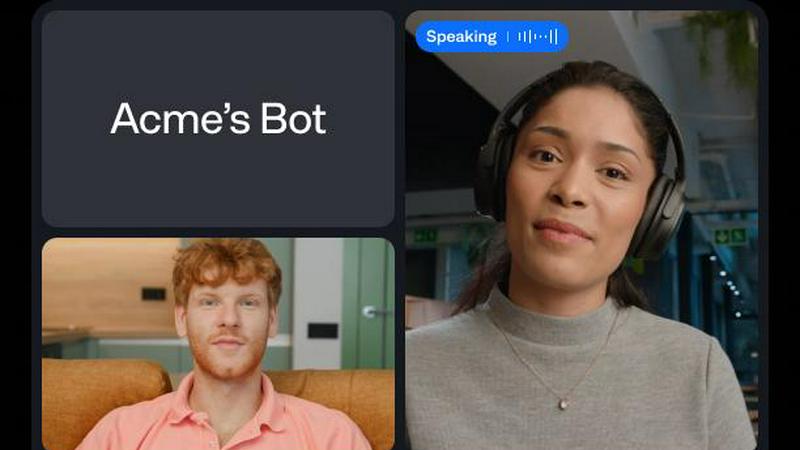
This flagship feature allows you to programmatically join a bot to video conferences on Zoom, Teams, Google Meet, and Slack Huddles. It is the ideal solution for scenarios requiring explicit recording consent or for building interactive AI meeting agents. The bot can capture high-quality recordings, real-time transcripts, participant data, and chat messages, providing a complete and compliant data pipeline without any desktop software installation required by end-users.
Desktop Recording SDK
For a stealthier, user-initiated recording experience, the Desktop Recording SDK enables capture directly from a user's desktop application. This method is perfect for applications where a bot in the call is not desired. It seamlessly records video conferences and even in-person meetings, handling complex edge cases and permissions to deliver reliable audio, video, and screen share data directly to your application's backend.
Comprehensive Data Extraction
Recall.ai delivers over 100 distinct pieces of meeting intelligence through a single API call. This goes beyond basic transcripts to include perfectly diarized speaker attribution, separate audio and video streams per participant, meeting metadata, participant emails, screenshare content, and chat logs. This rich, structured data is the fuel for powerful AI analysis, actionable insights, and automated workflows.
Enterprise-Grade Security & Compliance
Built for business-critical applications, Recall.ai is architected with security as a foundation. It boasts SOC 2 Type II and ISO 27001 certifications, alongside compliance frameworks for HIPAA, GDPR, and CCPA. Features like built-in recording consent mechanisms ensure that products built on Recall.ai can meet the stringent security and privacy requirements of legal, healthcare, and enterprise customers.
Use Cases
AI-Powered Meeting Assistants & Scribes
Companies are using Recall.ai to build intelligent assistants that automatically join meetings, transcribe discussions in real-time, identify action items, and generate concise summaries. This is transformative for industries like healthcare, where AI scribes can document patient consultations, and for business meetings, ensuring no critical detail is lost and boosting team productivity.
Sales Coaching and Conversation Intelligence
Revenue and sales teams leverage Recall.ai to analyze sales calls at scale. By capturing every interaction, platforms can provide feedback on talk-to-listen ratios, keyword usage, and competitor mentions. This data-driven coaching helps reps improve performance, ensures consistency in messaging, and unlocks insights into what truly drives deals to close.
Automated Note-Taking and Knowledge Management
Productivity and project management tools integrate Recall.ai to automatically create searchable, timestamped notes from every team sync, client check-in, or brainstorming session. This transforms ephemeral conversations into a permanent, organized knowledge base, making information instantly accessible and eliminating the friction of manual note-taking.
Enhanced Hiring and Interview Analysis
Recruiting and HR tech platforms use Recall.ai to record and transcribe interviews. This allows for structured evaluation, reduces bias by focusing on content, and enables hiring managers to review candidate responses without needing to be present. The data can also be analyzed to improve interview questions and assess communication skills objectively.
Frequently Asked Questions
What meeting platforms does Recall.ai support?
Recall.ai provides comprehensive API support for all major video conferencing platforms, including Zoom, Microsoft Teams, Google Meet, and Slack Huddles. This unified integration means developers can access a consistent data model across every platform their customers use, drastically simplifying the development process.
How does Recall.ai handle recording consent and privacy?
Recall.ai is built with compliance as a priority. Its Meeting Bot API is designed for explicit consent scenarios, where the bot joins as a visible participant. Furthermore, the platform provides tools and features to help developers implement proper consent workflows. Recall.ai also adheres to major global privacy standards like GDPR and CCPA.
What is the difference between the Meeting Bot API and the Desktop SDK?
The Meeting Bot API involves a bot joining the call as a virtual participant, which is best for building autonomous agents or when you need a clear, auditable record of consent. The Desktop Recording SDK captures meetings directly from a user's desktop app, offering a more invisible integration for user-initiated recording within your own application's interface.
Can I get real-time data streams from meetings?
Yes, absolutely. Recall.ai offers powerful real-time capabilities. You can receive live audio, video, and transcription streams as the meeting happens. This enables the creation of live captioning, real-time sentiment analysis, and interactive AI agents that can respond or provide information during the conversation itself.