
Formflow vs Miget
Side-by-side comparison to help you choose the right AI tool.

Transform your business with Formflow, the free no-code form builder that creates smart, interactive forms in seconds.
Last updated: March 1, 2026

Miget
Deploy unlimited services on one flat-rate plan.
Visual Comparison
Formflow
Miget

Overview
About Formflow
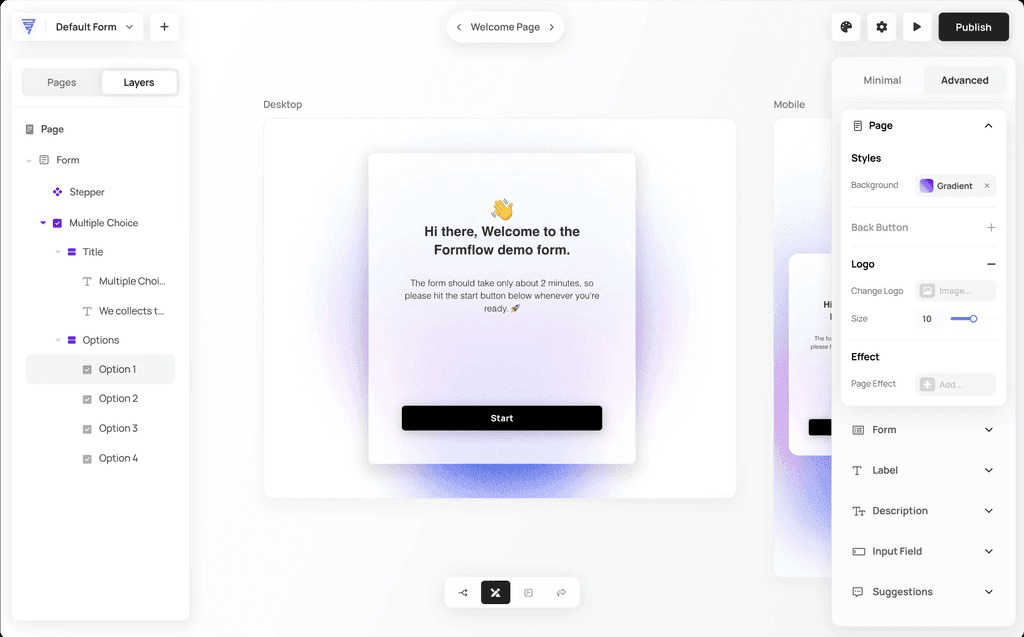
Formflow is a cutting-edge interactive experience builder that redefines the way marketers and business owners create forms. Unlike traditional form tools, Formflow empowers users to design engaging forms that not only capture vital information but also foster meaningful interactions, enhancing overall user engagement. With its state-of-the-art no-code editor, users can construct highly customized forms that resonate with their brand identity while utilizing advanced features like real-time email validation and seamless integrations. The platform revolutionizes the often tedious task of form creation into an exciting and creative endeavor. By allowing businesses to craft forms that feel like a natural extension of their websites, Formflow ensures that every interaction is not just a data entry point, but a valuable opportunity for connection. Built specifically for marketers, this tool guarantees effective lead capture while delivering an enjoyable user experience—making it a must-have in today’s digital landscape.
About Miget
Miget – Stop paying per app. Start paying per compute.
Traditional PaaS platforms charge you for every app, database, and worker separately. Miget flips that model: pick a fixed compute plan, then deploy as many services as you want inside it.
- Unlimited apps, databases, and background workers per plan
- No per-service billing surprises
- Built on Kubernetes with full isolation between tenants
- Deploy from Git, GitHub, Registry with zero-config builds
- Managed PostgreSQL, Redis, and more
- Custom domains with automatic TLS
Whether you're running a single side project or a full production stack, you only pay for the compute you reserve—not the number of things you run on it.